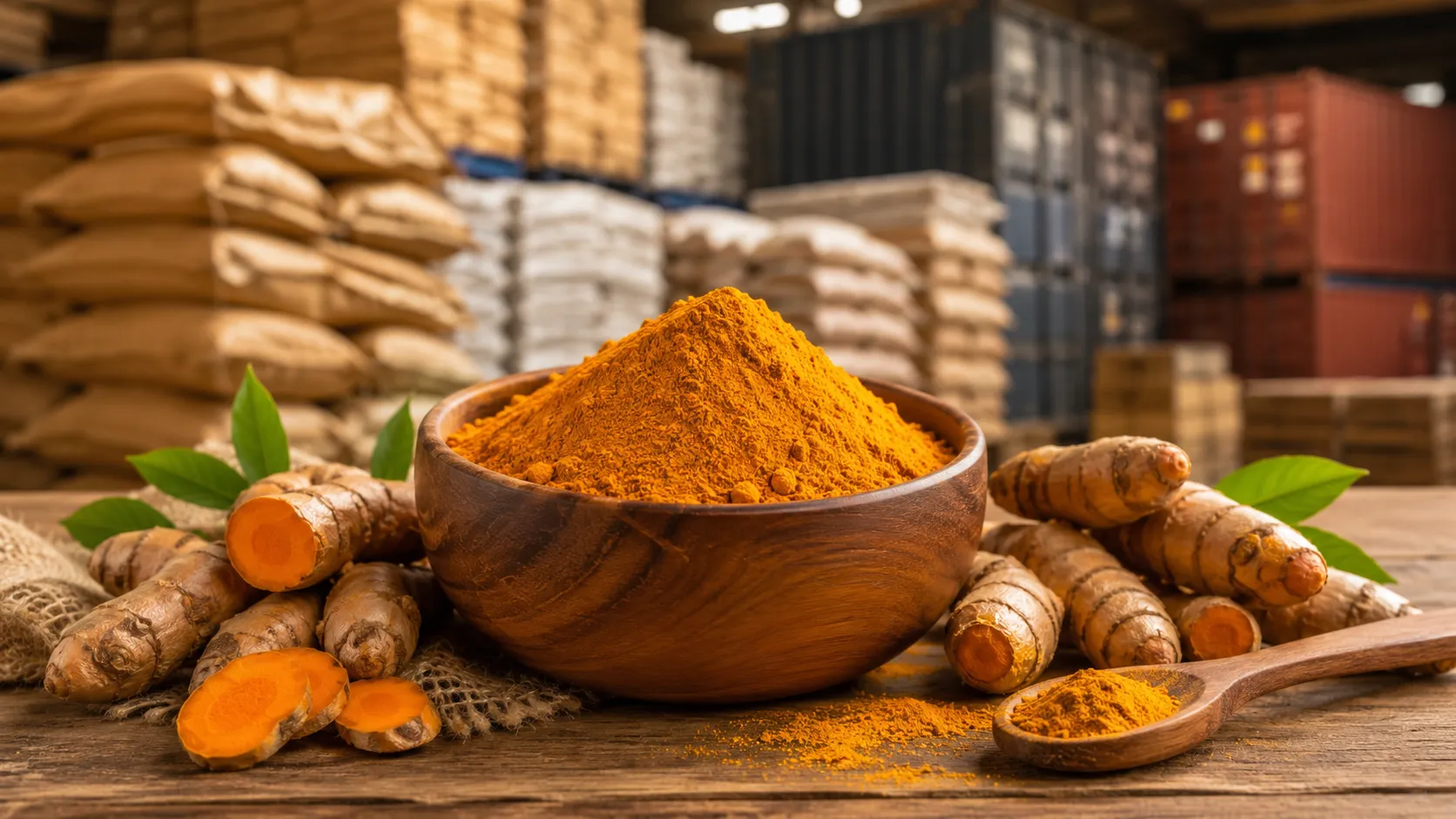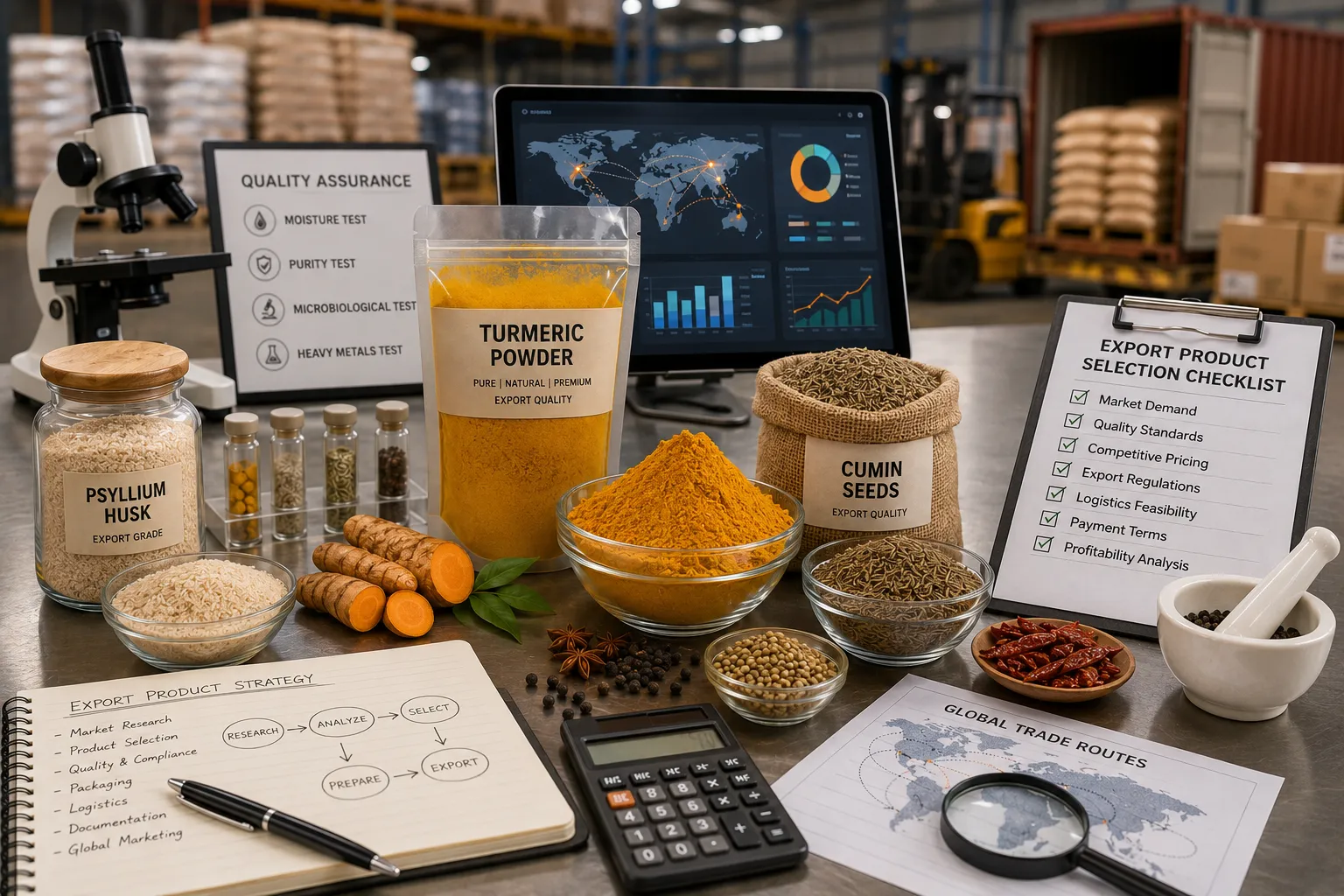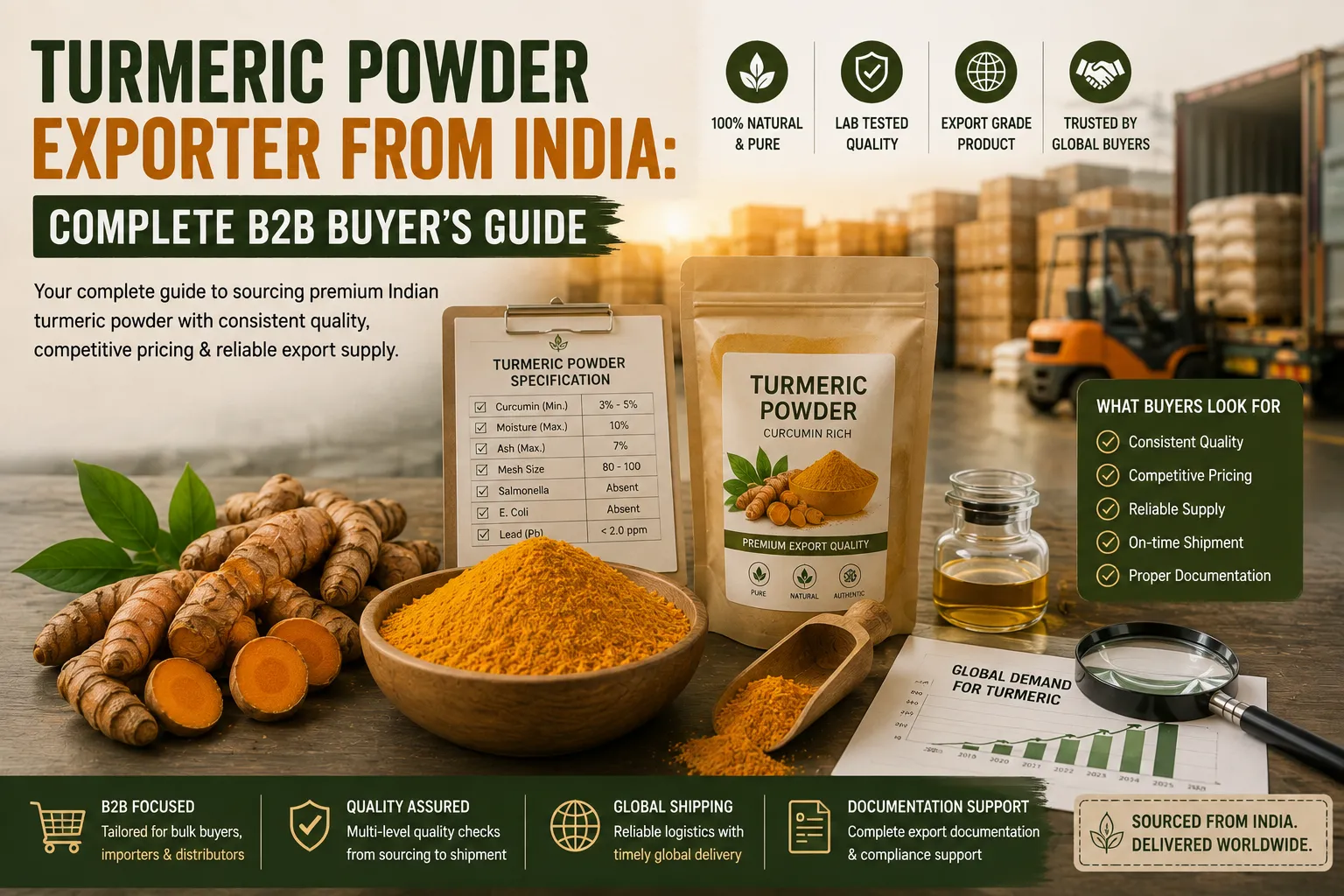
India is the world's largest producer and exporter of turmeric, supplying food manufacturers, spice brands, wholesalers and ingredient companies across the Middle East, Europe, Africa, Asia and North America.
However, sourcing turmeric powder successfully involves much more than finding the lowest price. International buyers need to understand curcumin specifications, laboratory testing, packaging, export documentation and supplier verification before placing a bulk order.
This guide explains how professional B2B buyers source turmeric powder from India while reducing quality, documentation and logistics risks.
Why India Is the World's Leading Turmeric Exporter
India has cultivated turmeric for centuries and continues to dominate global production because of its favorable growing conditions, experienced farming communities and established export infrastructure.
Major production regions include Erode in Tamil Nadu and Sangli in Maharashtra, both widely recognized for commercial turmeric production. HMT Exim's company profile also identifies these regions as sourcing origins for its turmeric products.
For international buyers, India's advantage lies in:
- Reliable year-round sourcing
- Established export logistics
- Multiple commercial turmeric varieties
- Laboratory-tested quality options
- Flexible packaging
- Private-label capabilities through suitable supply arrangements
What Makes Export-Quality Turmeric Powder Different?
Export-quality turmeric powder is evaluated against technical specifications rather than appearance alone.
Professional buyers typically define quality requirements before requesting quotations.
| Quality Parameter | Why It Matters |
|---|---|
| Curcumin or curcuminoid specification | Product specification |
| Moisture | Storage stability |
| Mesh size | Processing consistency |
| Purity | Quality assurance |
| Microbiological quality | Food safety requirements |
| Packaging | Shipment protection |
| Certificate of Analysis | Specification verification |
The complete specification should always be agreed before production begins.
Understanding Curcumin Specifications
One of the most common questions buyers ask is whether they should purchase 2%, 3%, 3.5% or 4% turmeric.
The answer depends on the intended application.
Curcumin is one of the naturally occurring curcuminoids found in turmeric, but buyers should confirm:
- Whether the quoted percentage refers to curcumin or total curcuminoids
- The analytical method used
- The reporting basis
- The agreed specification tolerance
Our detailed guide on what curcumin means in turmeric explains how buyers should interpret laboratory specifications.
Common Turmeric Powder Specifications
Commercial specifications vary according to buyer requirements, but a professional quotation should clearly define every quality parameter.
| Specification Area | Buyer Should Confirm |
|---|---|
| Curcumin or curcuminoids | Required specification |
| Moisture | Maximum acceptable level |
| Mesh size | Required particle size |
| Packaging | Required pack size |
| Shelf life | Commercial requirement |
| Origin | Required sourcing region if applicable |
Every specification should appear consistently across the quotation, purchase order and quality documentation.
How International Buyers Should Evaluate Turmeric Suppliers
Before placing a commercial order, buyers should evaluate both the product and the exporter.
Important checks include:
- Business registration
- Export capability
- Laboratory documentation
- Product specifications
- Packaging capability
- Communication quality
- Sample evaluation
- Commercial clarity
Our guide on how to verify an Indian exporter provides a practical supplier verification framework.
Laboratory Testing and Quality Control
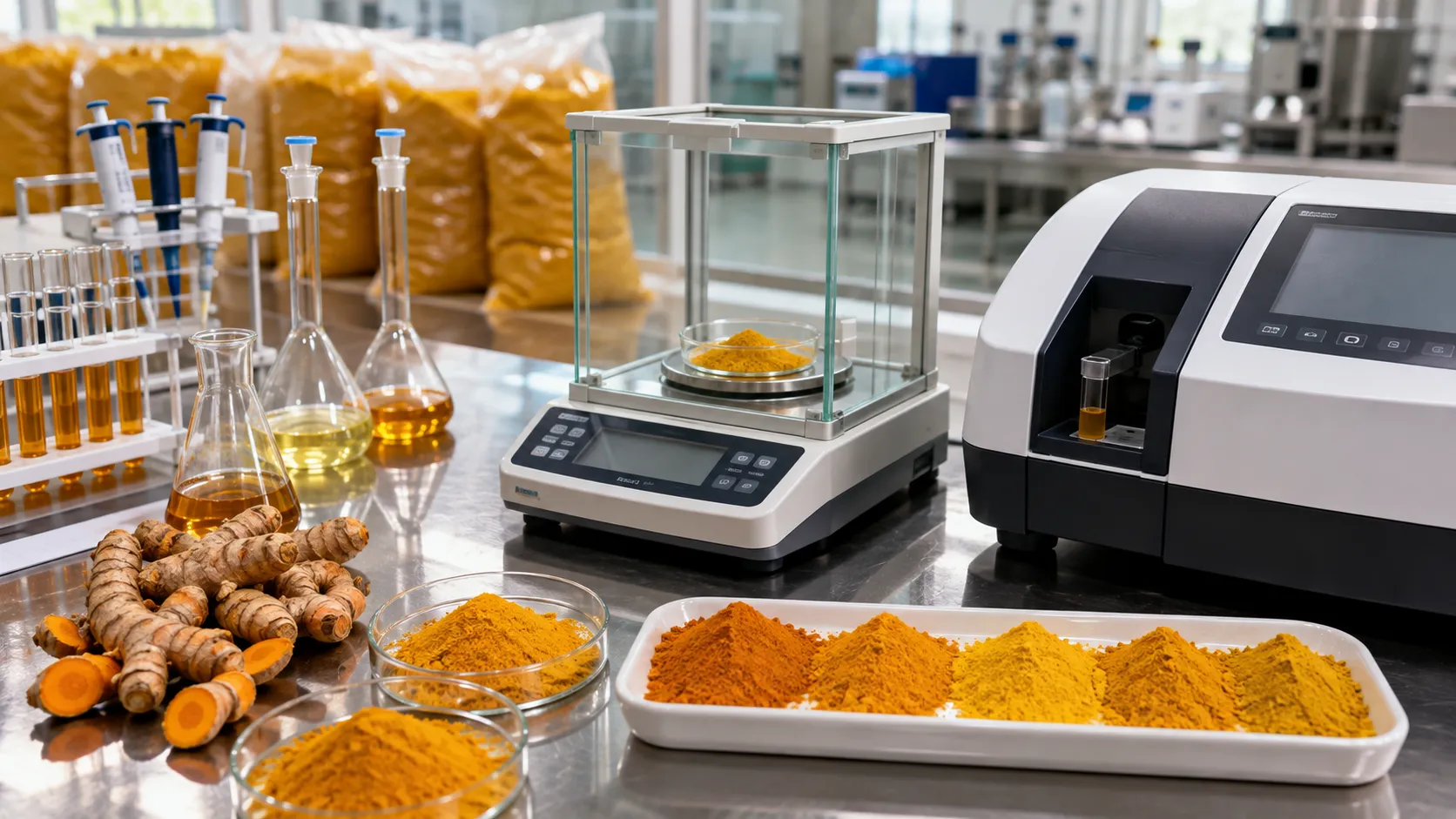
Professional buyers typically request laboratory documentation before approving commercial shipments.
Depending on the application and destination country, buyers may review:
- Certificate of Analysis
- Curcumin or curcuminoid results
- Moisture
- Microbiological testing
- Heavy metals where required
- Pesticide-residue testing where required
- Batch identification
The testing panel should match the agreed commercial specification.
Packaging Options for Export
Packaging plays a critical role in protecting turmeric during international transportation.
Common commercial packaging includes:
- 25 kg PP bags
- 50 kg PP bags
- Food-grade inner liners
- Kraft paper bags
- Vacuum packaging where applicable
- Private-label packaging where commercially arranged
HMT Exim's company profile also describes export-ready packaging options including PP bags, vacuum packs and customized branding arrangements.
Export Documents Buyers Should Expect
Documentation requirements vary by destination, but a professional export shipment commonly includes:
- Commercial Invoice
- Packing List
- Bill of Lading
- Certificate of Origin
- Phytosanitary Certificate where applicable
- Certificate of Analysis where applicable
- Other destination-specific documents
For a complete overview, see our Complete Export Process from India.
How HMT Exim Supports International Buyers
HMT Exim is a Gujarat-based export company focused on sourcing quality Indian products for international buyers. According to the company profile, the business emphasizes direct sourcing from farmer networks and APMC markets, laboratory-focused quality checks, export-ready packaging and documentation support for international shipments.
Buyers can also explore the Turmeric Powder product page for product information and commercial enquiries.
Turmeric Buyer's Checklist Before Bulk Purchase
- ☐ Product specification is defined
- ☐ Curcumin requirement is confirmed
- ☐ Moisture requirement is documented
- ☐ Mesh size is specified
- ☐ Sample is approved
- ☐ COA requirements are agreed
- ☐ Packaging is confirmed
- ☐ Destination-country requirements are reviewed
- ☐ Commercial quotation matches the specification
- ☐ Export documentation is confirmed
Frequently Asked Questions
Why is India the largest turmeric exporter?
India combines extensive cultivation, established processing infrastructure and mature export logistics, making it one of the world's leading commercial sources of turmeric.
What curcumin percentage should buyers request?
The appropriate specification depends on the intended application. Buyers should define their technical requirement before requesting quotations.
Should buyers request a Certificate of Analysis?
Yes. A COA helps buyers compare the product against the agreed commercial specification.
Can packaging be customized?
Packaging options may include food-grade bulk bags, vacuum packs and private-label arrangements depending on commercial requirements.
What documents are required for turmeric exports?
Common export documents include the Commercial Invoice, Packing List, Bill of Lading, Certificate of Origin and other destination-specific documents where applicable.
Final Takeaway
Successful turmeric sourcing begins with a clear written specification rather than simply comparing prices. International buyers should evaluate curcumin specifications, laboratory testing, packaging, export documentation and supplier verification together.
If you are looking for a reliable turmeric powder exporter from India, contact HMT Exim to discuss your required specification, quantity, packaging and destination.