Finding a turmeric supplier is easy. Finding one that can consistently deliver the agreed specification, documentation and shipment quality is much harder.
International buyers sourcing turmeric from India should evaluate suppliers using a structured due-diligence process rather than comparing quotations on price alone. A reliable supplier should be able to explain product specifications, quality-control procedures, packaging options and export documentation before production begins.
This guide explains 15 practical checks buyers should perform before placing a bulk turmeric order from India.
Why Supplier Selection Matters
Turmeric quality can vary depending on origin, processing, specifications and commercial requirements. Choosing the right supplier helps reduce sourcing risks, improve consistency and simplify future orders.
Professional buyers normally evaluate both the company and the product before approving commercial shipments.
1. Verify the Exporter's Business Registration
Start by confirming that the exporter operates as a legitimate export business.
Important business documents may include:
- Import Export Code (IEC)
- GST registration where applicable
- FSSAI registration where applicable
- APEDA registration where applicable
For a complete verification process, read How to Verify an Indian Exporter.
2. Confirm the Product Origin
India produces turmeric across several major growing regions, including Erode in Tamil Nadu and Sangli in Maharashtra.
Instead of assuming every turmeric product is identical, buyers should ask the supplier to confirm the sourcing region and the commercial specification being offered.
3. Request a Detailed Product Specification
A professional quotation should include a clear product specification rather than a simple product name.
Ask for:
- Curcumin or curcuminoid specification
- Moisture
- Mesh size
- Packaging
- Shelf life
- Product form
4. Understand the Curcumin Requirement
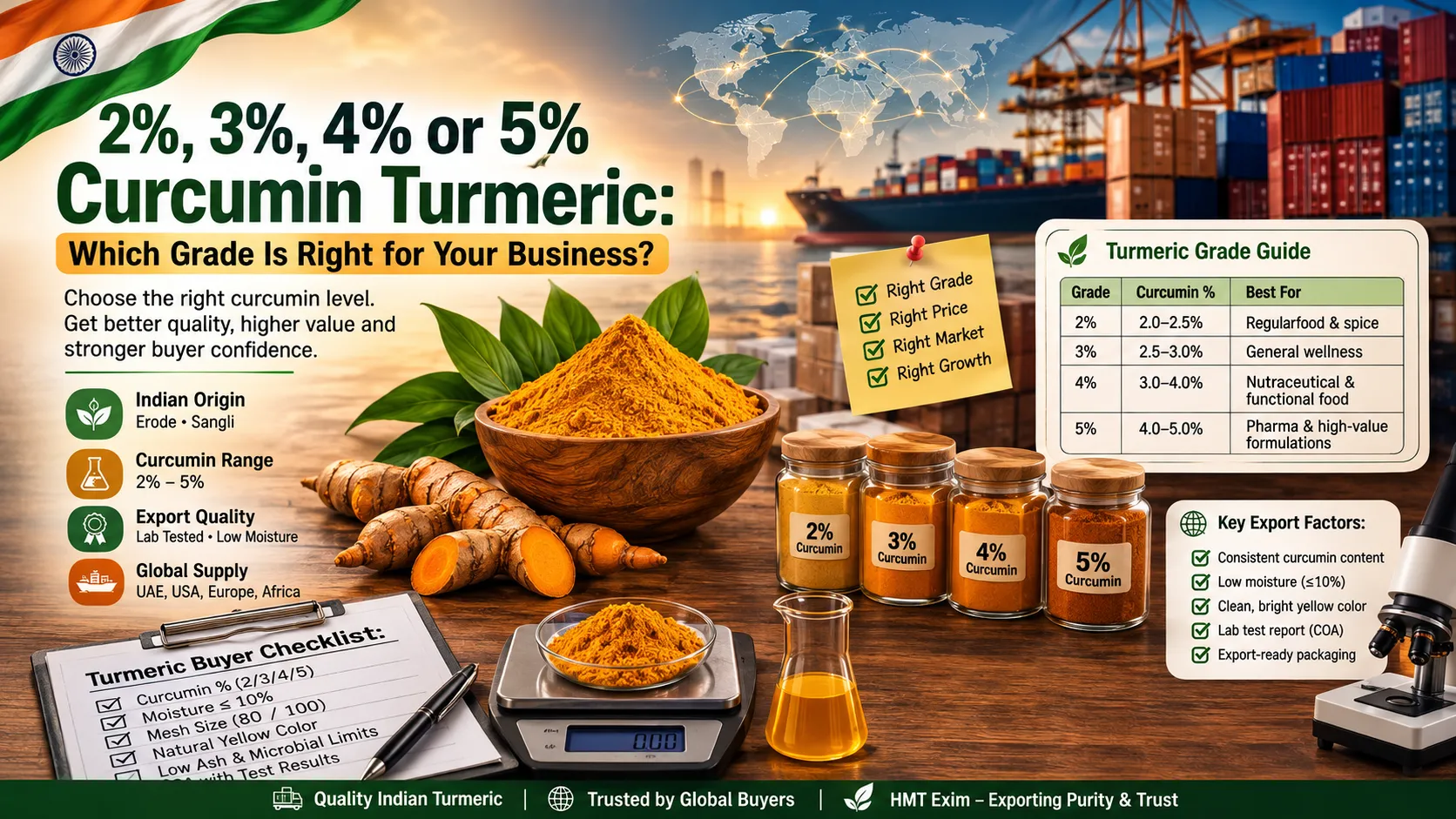
Many buyers request 2%, 3%, 3.5% or 4% turmeric.
Before comparing quotations, confirm whether the supplier is referring to curcumin or total curcuminoids and understand the testing basis.
Our guide on what is curcumin in turmeric explains this in detail.
5. Ask for a Certificate of Analysis
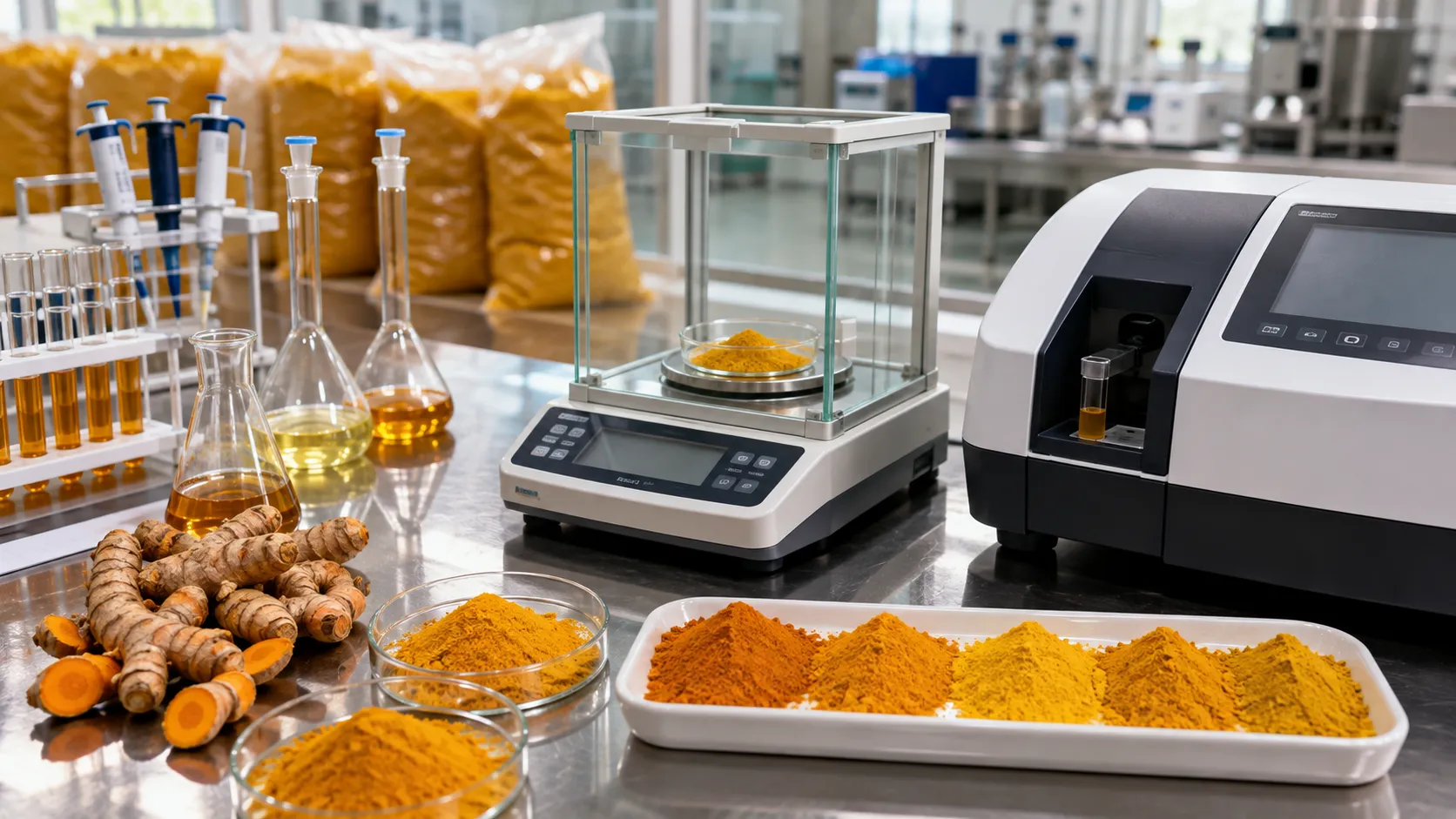
A COA allows buyers to compare laboratory results with the agreed commercial specification.
Depending on the product, a COA may include:
- Curcumin or curcuminoid results
- Moisture
- Microbiological parameters
- Heavy metals where required
- Batch identification
6. Evaluate Sample Quality
Never rely only on catalogue photographs.
Before approving a commercial order, evaluate a representative sample against the written specification.
Check:
- Colour
- Texture
- Particle consistency
- Packaging condition
- Product uniformity
7. Review Quality-Control Procedures
A reliable supplier should be able to explain how product quality is monitored before shipment.
Ask about:
- Batch inspection
- Laboratory testing
- Packaging inspection
- Shipment preparation
8. Confirm Packaging Options
Packaging should match both the product and the transportation route.
Common commercial options include:
- 25 kg PP bags
- 50 kg PP bags
- Food-grade inner liners
- Kraft paper bags
- Vacuum packaging where applicable
9. Review Export Documentation
Documentation is as important as the product itself.
Typical export documents include:
- Commercial Invoice
- Packing List
- Bill of Lading
- Certificate of Origin
- Phytosanitary Certificate where applicable
- Certificate of Analysis where applicable
Our Complete Export Process from India guide explains how these documents fit into an international shipment.
10. Check Communication Quality
Professional exporters usually provide clear answers about specifications, documentation and commercial terms.
Warning signs include:
- Vague specifications
- Incomplete quotations
- Unclear documentation
- Slow responses on technical questions
11. Confirm Quantity Capability
Before placing a bulk order, confirm that the supplier can consistently support the required commercial quantity.
This is particularly important for repeat purchasing relationships.
12. Understand Commercial Terms
Clarify commercial details before production begins.
Discuss:
- Quantity
- Packaging
- Delivery expectations
- Payment terms
- Shipping terms
13. Compare Suppliers Beyond Price
Instead of selecting the cheapest quotation, compare:
- Product specification
- Quality documentation
- Packaging
- Communication
- Export capability
- Commercial clarity
This creates a more meaningful supplier comparison.
14. Verify Export Experience
Ask how the supplier handles export coordination, documentation and shipment preparation.
Even when buyer names remain confidential, the supplier should be able to explain the export process professionally.
15. Build a Long-Term Supplier Relationship
The strongest sourcing relationships are built on consistency rather than one-time price advantages.
Long-term buyers often benefit from:
- Consistent specifications
- Faster communication
- Repeat-order efficiency
- Better production planning
Supplier Evaluation Checklist
- ☐ Business registration verified
- ☐ Product origin confirmed
- ☐ Product specification received
- ☐ Curcumin requirement clarified
- ☐ COA reviewed
- ☐ Sample approved
- ☐ Quality-control process understood
- ☐ Packaging confirmed
- ☐ Export documentation reviewed
- ☐ Communication evaluated
- ☐ Quantity capability confirmed
- ☐ Commercial terms agreed
- ☐ Supplier comparison completed
- ☐ Export process understood
- ☐ Long-term relationship considered
How HMT Exim Supports International Buyers
HMT Exim focuses on helping international buyers source Indian products through supplier coordination, quality-focused inspections, export-ready packaging and documentation support.
According to the company profile, HMT Exim sources through farmer networks and APMC markets while supporting laboratory-focused quality checks and export-ready packaging for international shipments.
Buyers can explore the Turmeric Powder product page or contact HMT Exim to discuss specifications, quantities and destination requirements.
Frequently Asked Questions
How do I verify a turmeric supplier in India?
Verify business registration, review product specifications, evaluate samples, request laboratory documentation and confirm export capability before placing a commercial order.
Should I request a Certificate of Analysis?
Yes. A COA helps buyers compare laboratory results against the agreed specification.
What documents should an exporter provide?
Depending on the shipment, exporters may provide a Commercial Invoice, Packing List, Bill of Lading, Certificate of Origin, Phytosanitary Certificate where applicable and other destination-specific documents.
Is the cheapest supplier always the best option?
No. Buyers should compare specifications, quality documentation, communication and export capability alongside price.
Should I approve a sample before buying bulk?
Yes. Evaluating a representative sample helps confirm that the product matches the agreed specification before commercial production.
Final Takeaway
Choosing a reliable turmeric supplier is about evaluating the complete sourcing process—not just comparing prices. Buyers who verify business registration, review quality documentation, confirm specifications and approve representative samples are better positioned to build successful long-term sourcing relationships.
If you are looking for a reliable Indian turmeric export partner, contact HMT Exim to discuss your product requirements.