Many first-time exporters believe finding an international buyer is the hardest part of exporting. In reality, one of the biggest reasons shipments face delays is incorrect or incomplete export documentation.
Whether you're exporting turmeric powder, psyllium husk or other Indian products, buyers expect accurate commercial documents that match the shipment exactly.
This guide explains the essential export documents, when they're used and how they fit into a professional export workflow.
Why Export Documentation Matters
Every international shipment creates a paper trail that customs authorities, banks, freight forwarders and buyers rely on.
Proper documentation helps:
- Clear customs smoothly
- Reduce shipment delays
- Avoid document discrepancies
- Support buyer confidence
- Meet destination-country requirements
- Maintain professional export standards
Even a small mismatch between documents can create unnecessary complications during international trade.
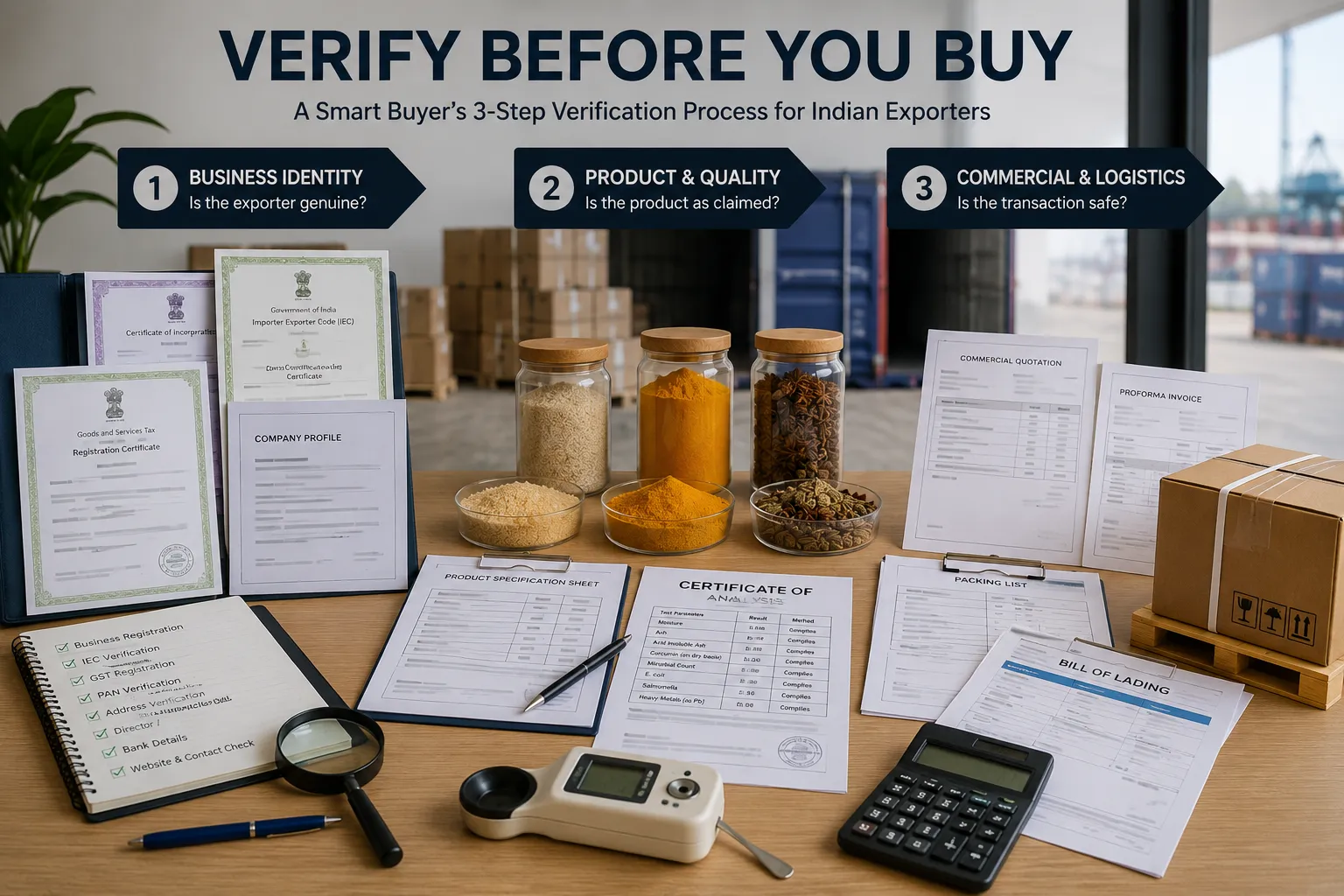
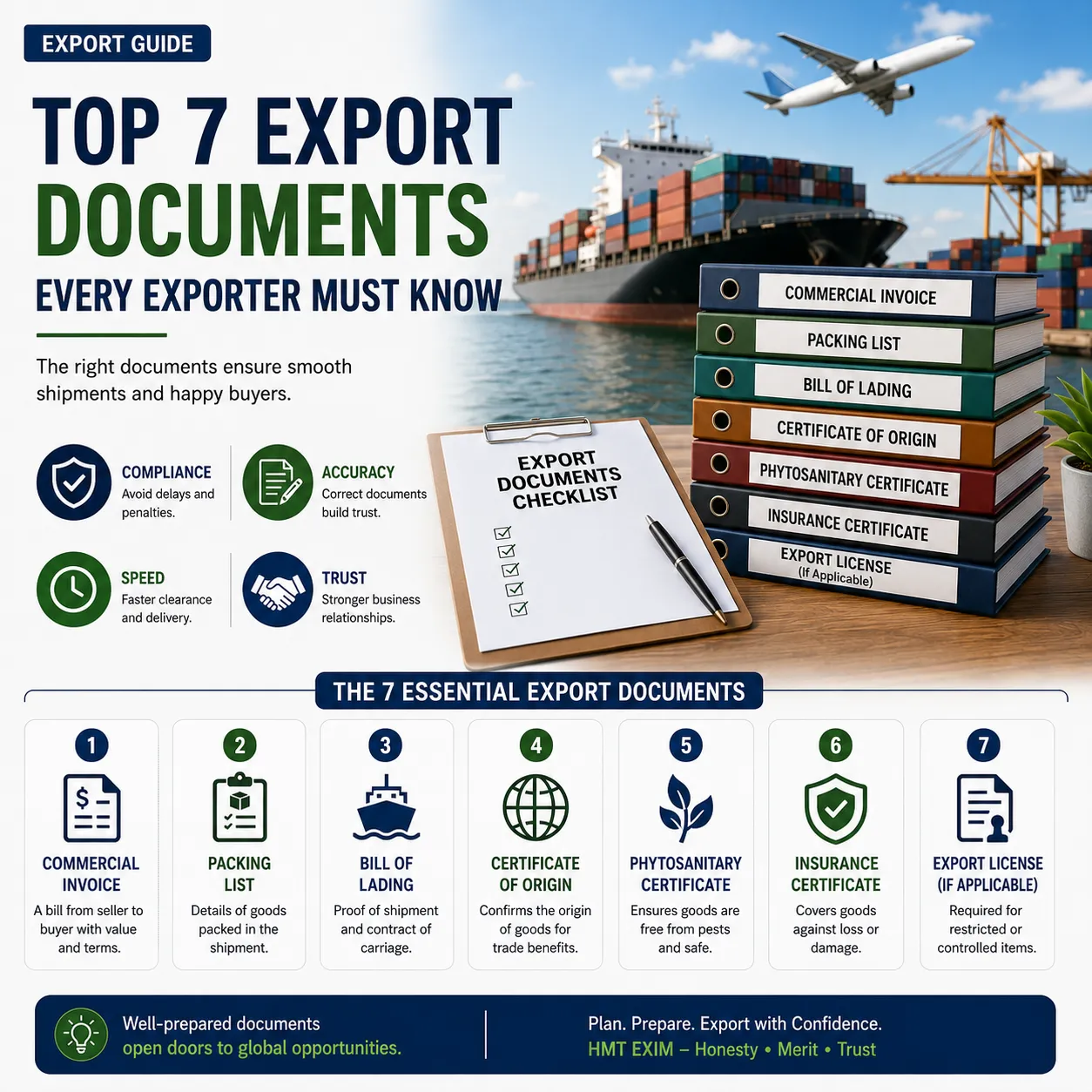
Complete Export Documentation Checklist
Not every shipment requires every document. Requirements depend on the product, destination country and buyer agreement.
1. Commercial Invoice
The Commercial Invoice is one of the most important export documents because it officially records the sale between exporter and buyer.
It typically includes:
- Exporter details
- Buyer details
- Product description
- Quantity
- Unit price
- Total value
- Currency
- Incoterm
- Port information
The product description should match other shipment documents consistently.
2. Packing List
The Packing List explains how the shipment is physically packed.
It commonly includes:
- Number of packages
- Package type
- Gross weight
- Net weight
- Dimensions
- Package identification
Freight forwarders and customs authorities frequently rely on this document during shipment handling.
3. Bill of Lading
The Bill of Lading is a transport document issued during the shipping process.
It connects:
- Exporter
- Carrier
- Shipment
- Destination
Buyers often require this document as part of the shipping documentation package.
4. Certificate of Origin
The Certificate of Origin confirms that the goods originate from India where applicable.
Depending on the destination market, buyers may request this document for customs or commercial purposes.
5. Certificate of Analysis (COA)
For food ingredients, spices and functional ingredients, the COA can become one of the most important quality documents.
Depending on customer requirements, it may include:
- Curcumin percentage
- Moisture
- Purity
- Mesh size
- Microbiological parameters
- Heavy metals
- Batch information
Products such as Turmeric Powder and Psyllium Husk often involve laboratory documentation during export transactions.
6. Phytosanitary Certificate
Some agricultural products require phytosanitary documentation depending on the destination country's import regulations.
Exporters should confirm buyer requirements before shipment.
7. Fumigation Certificate
Certain shipments may require fumigation documentation depending on packaging materials, destination-country regulations or customer requirements.
This requirement should always be verified before dispatch.
How Documents Work Together
Professional exporters ensure information remains consistent across every document.
Consistency helps prevent document discrepancies during customs clearance.
Common Documentation Mistakes
- Different product names across documents
- Incorrect weights
- Missing shipment references
- Incomplete buyer information
- Incorrect Incoterms
- Using outdated document templates
Careful review before shipment reduces avoidable errors.
Export Documentation Workflow
A practical documentation workflow looks like:
- Buyer confirms order.
- Proforma Invoice is approved.
- Production is completed.
- Quality inspection takes place.
- Packaging is finalized.
- Commercial documents are prepared.
- Shipment is booked.
- Final shipping documents are issued.
Our guide on The Complete Export Process from India explains how documentation fits into the larger export journey.
How HMT Exim Supports Documentation
HMT Exim provides export-oriented documentation support alongside quality-focused sourcing, packaging coordination and shipment preparation for international buyers. The company's product profile highlights commercial documentation as part of its customer-focused export process.
Learn more about our export solutions on the Contact page.
Frequently Asked Questions
Is a Commercial Invoice mandatory?
It is one of the primary documents used in commercial export transactions.
Does every shipment require a COA?
No. The requirement depends on the product, buyer agreement and destination market.
When is a Phytosanitary Certificate needed?
Certain agricultural products require it depending on destination-country regulations.
Can exporters customize documentation?
Commercial documentation should match buyer requirements while remaining accurate and consistent.
Why do document mismatches cause delays?
Inconsistent shipment information may require clarification during customs or logistics processing.
Final Takeaway
Professional export documentation is about consistency as much as compliance.
When every document accurately reflects the shipment, exporters reduce delays, build buyer confidence and create smoother international trade operations.
If you're preparing your first export shipment from India, contact HMT Exim to discuss documentation, packaging and export requirements.