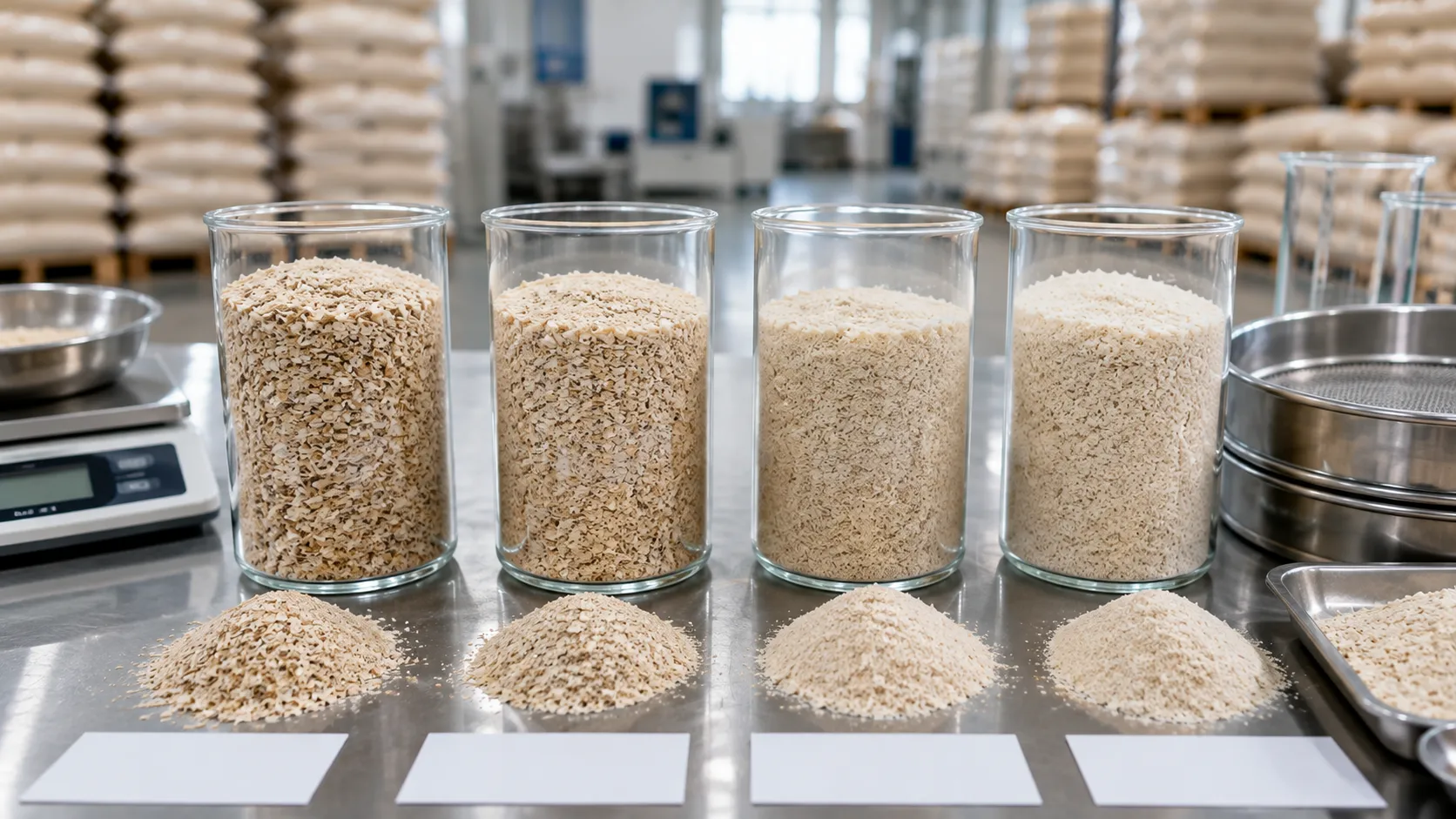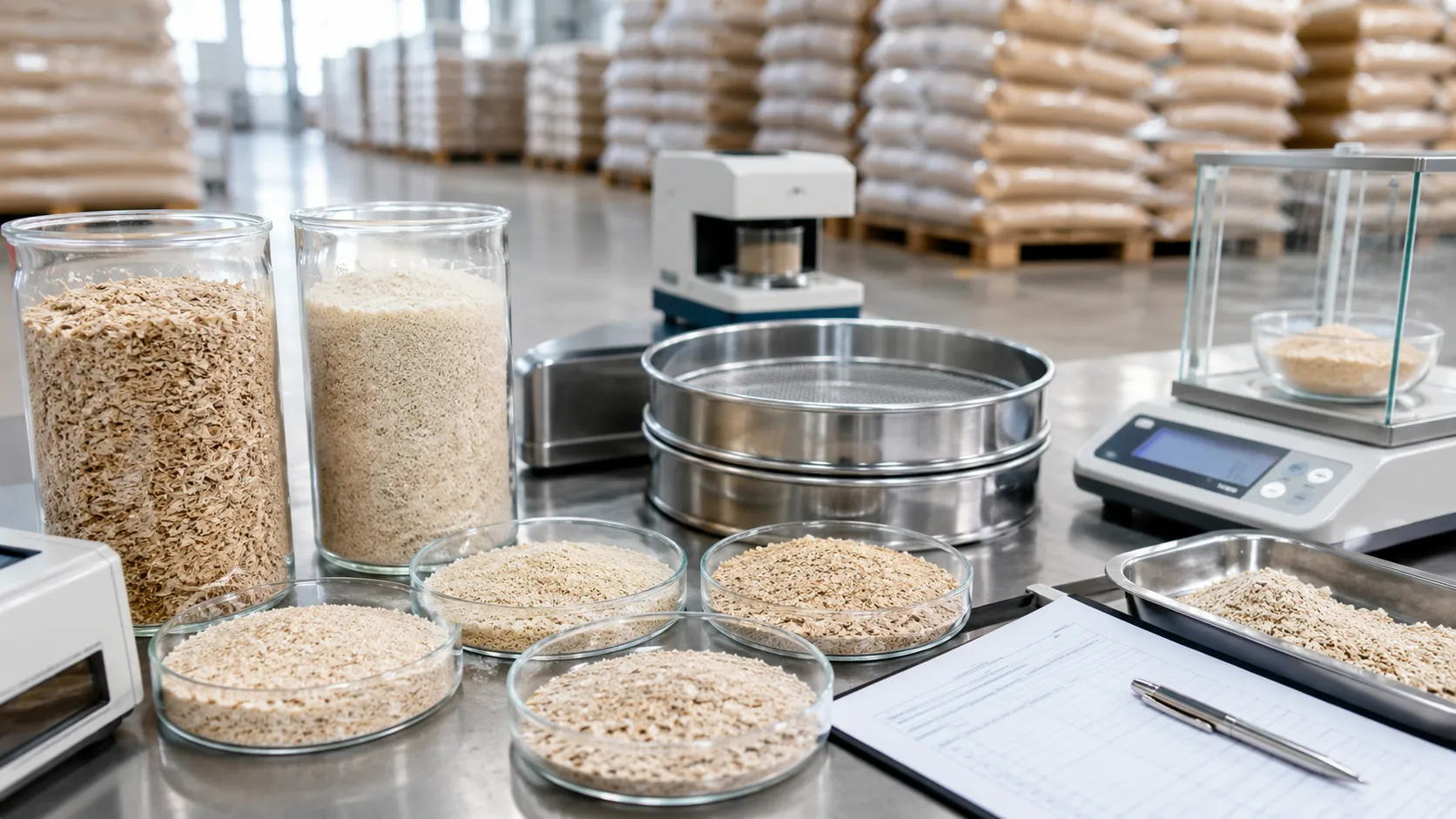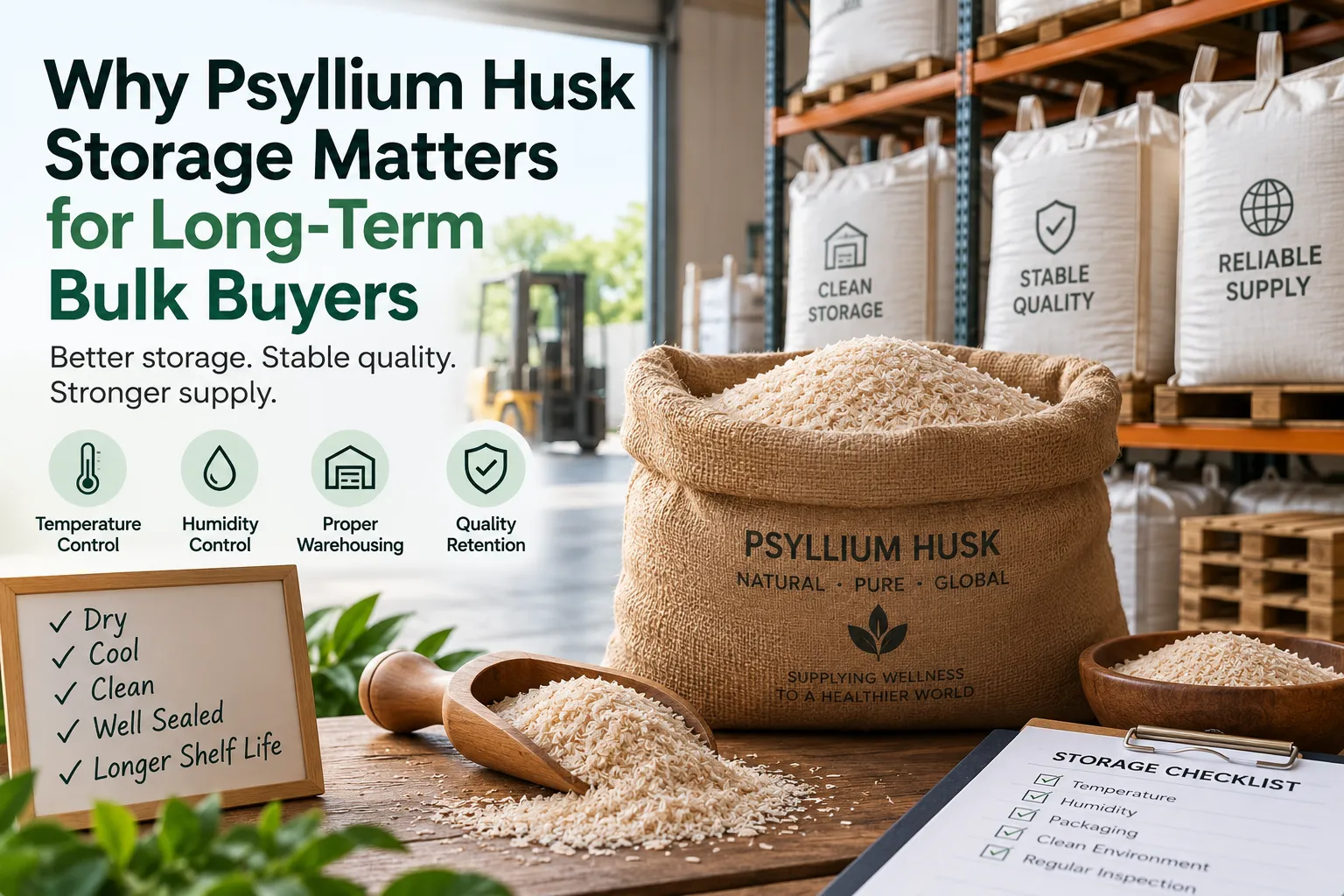
For a bulk buyer, receiving good-quality Psyllium Husk is only one part of the sourcing process. The product may remain in storage for weeks or months before it is used, processed or distributed. During that period, storage conditions can influence the product's physical condition and overall quality.
This is particularly important for importers, ingredient distributors and manufacturers purchasing Psyllium Husk in commercial quantities. A well-defined storage and handling process helps protect the quality that was approved at the time of purchase.
This guide explains why Psyllium Husk storage matters, which factors buyers should consider and what questions should be discussed with suppliers before a bulk shipment is ordered.
Why Does Psyllium Husk Storage Matter?
Psyllium Husk is a dry plant-based ingredient that can be affected by unsuitable storage conditions. Exposure to moisture, poor packaging, excessive heat, contamination or improper handling can create quality concerns during the storage period.
For a bulk buyer, this matters because the commercial value of the shipment depends not only on the condition at arrival but also on maintaining that condition until the product reaches its intended application.
Storage should therefore be considered part of the complete supply chain rather than something that begins after the shipment has arrived.
What Can Affect Psyllium Husk During Storage?
Several practical factors should be considered when storing bulk Psyllium Husk:
- Moisture exposure
- Packaging integrity
- Warehouse cleanliness
- Temperature and environmental conditions
- Exposure to contaminants
- Handling practices
- Length of storage
- Stock rotation
The relative importance of each factor depends on the product, packaging system, warehouse environment and intended storage period.
Moisture Is a Key Storage Consideration
Moisture management is particularly important for dry ingredients.
If bulk packaging is exposed to moisture during storage or handling, the product may experience changes in physical condition. This is why buyers should pay attention to both the moisture specification of the product and the ability of the packaging to protect it after delivery.
Buyers should ask suppliers how the product is packed for international transportation and whether the packaging includes an appropriate inner liner or other protection.
Moisture should also be considered alongside warehouse conditions. A suitable product can still be exposed to unnecessary risk if it is stored in an unsuitable environment.
Packaging Protects More Than the Product
Export packaging serves an important role after the shipment leaves the supplier.
Commercial Psyllium Husk may be supplied in bulk packaging such as PP bags with an inner liner, depending on the buyer's requirements.
Before placing an order, buyers should clarify:
- Bag material
- Bag size
- Inner-liner requirements
- Closure method
- Packaging strength
- Whether customized packaging is required
For buyers handling large inventories, packaging integrity becomes especially important because damaged bags can expose the product to environmental conditions and contamination.
Warehouse Conditions Matter After Arrival
Once Psyllium Husk reaches the buyer's warehouse, storage responsibility shifts to the receiving organization.
A practical storage environment should be:
- Clean and well maintained
- Protected from direct moisture
- Suitable for dry food ingredients
- Free from avoidable contamination sources
- Organized to allow safe handling and inspection
Bulk bags should also be handled carefully to avoid unnecessary damage during unloading, movement and stacking.
Why Long-Term Buyers Need a Storage Plan
A buyer purchasing a small quantity may consume the product quickly. A bulk importer may hold considerably more inventory before the entire shipment is used.
This creates a different sourcing requirement.
Long-term buyers should consider:
- Expected inventory turnover
- Warehouse capacity
- Packaging format
- Storage environment
- Stock rotation procedure
- Inspection frequency
The objective is to maintain the agreed product condition throughout the period in which the inventory remains under storage.
Use Stock Rotation for Bulk Inventory
Good inventory management reduces unnecessary storage time.
Buyers can use a first-in, first-out approach where appropriate, ensuring older stock is consumed before newer stock. Batch identification should also be maintained so that inventory can be traced back to the relevant shipment and documentation.
This becomes increasingly useful when multiple Psyllium Husk shipments with different specifications or production batches are stored simultaneously.
Storage and Psyllium Husk Specifications
Storage should not be considered separately from the product specification.
Buyers may evaluate:
- Purity
- Moisture
- Swelling Index
- Mesh size
- Packaging
Our guide on Psyllium Husk Specifications explains these parameters and why they matter when evaluating bulk Psyllium Husk.
Likewise, buyers interested in hydration performance can review Psyllium Husk Swelling Index.
Storage Does Not Replace Supplier Quality Control
Good warehouse practices cannot compensate for an unsuitable product received from the supplier.
Before shipment, buyers should still verify the agreed specification, sample quality, packaging and available quality documentation.
Our guide on How to Evaluate Psyllium Husk Quality Before Buying provides a broader checklist for supplier and product evaluation.
Questions Bulk Buyers Should Ask Their Supplier
Before placing a long-term supply order, buyers should clarify:
- What packaging format will be used?
- Is an inner liner available?
- What product specifications are being agreed?
- How is the shipment protected during transportation?
- What batch information is provided?
- What quality documentation accompanies the shipment?
- What storage recommendations apply to the supplied product?
These questions help establish expectations before the product enters the buyer's warehouse.
Storage and International Shipping Are Connected
Psyllium Husk may spend considerable time moving through different stages of the supply chain before reaching its final destination.
The product can pass through processing, packaging, inland transportation, port handling, international shipping, customs clearance and final warehouse storage.
Every stage creates an opportunity for packaging damage or unsuitable environmental exposure. Buyers should therefore consider storage protection as part of the complete logistics plan.
How HMT Exim Supports Bulk Psyllium Husk Buyers
HMT Exim supplies Psyllium Husk for international B2B buyers with export-oriented packaging and quality-focused sourcing. Packaging requirements can be discussed according to the buyer's commercial requirements.
Explore the Psyllium Husk product page or contact HMT Exim to discuss product specifications, packaging and shipment requirements.
Frequently Asked Questions
Why is storage important for Psyllium Husk?
Proper storage helps maintain the product's condition after receipt and reduces exposure to moisture, contamination, packaging damage and other avoidable risks.
What is the biggest storage concern?
Moisture exposure is an important consideration for dry ingredients, alongside packaging integrity and warehouse conditions.
Should Psyllium Husk remain in its original packaging?
Buyers should follow the agreed packaging and storage requirements for the supplied product and avoid unnecessary exposure during handling.
Does storage affect Psyllium Husk quality?
Unsuitable storage conditions can affect the physical condition of a dry ingredient. Proper packaging, handling and warehouse management help reduce these risks.
How should bulk buyers manage multiple batches?
Maintain batch identification and use an appropriate stock-rotation system so inventory can be traced and older stock can be used appropriately.
Should buyers discuss storage with the exporter?
Yes. Storage requirements should be discussed alongside product specifications, packaging and transportation before a long-term bulk order is finalized.
Final Takeaway
For long-term bulk buyers, Psyllium Husk quality does not end when the shipment arrives. Maintaining product condition requires suitable packaging, careful handling, appropriate warehouse conditions and organized inventory management.
Buyers who consider storage requirements before ordering can build a more reliable supply process and reduce avoidable quality risks throughout the product's journey from exporter to end use.
If you are sourcing Psyllium Husk from India for bulk or recurring requirements, contact HMT Exim to discuss your product specifications and export packaging needs.