India is an important sourcing origin for psyllium husk, making Indian suppliers relevant to international buyers looking for bulk psyllium ingredients. But finding a supplier is only the beginning of the sourcing process.
For an importer, the more important question is whether an exporter can consistently supply the required specification, packaging, documentation and shipment quantity.
This guide explains what international buyers should examine when evaluating psyllium husk exporters from India and how to structure the sourcing process before placing a commercial order.
Why Buyers Source Psyllium Husk from India
India has an established agricultural and processing ecosystem for psyllium, with supply chains connecting cultivation, processing, grading, packaging and export operations.
For international buyers, the practical advantage is access to suppliers capable of handling different commercial requirements, from standard bulk shipments to specifications designed around a particular application.
However, the existence of a large supply base does not mean every exporter offers the same product specification, quality controls or service capabilities.
What Does a Psyllium Husk Exporter Actually Do?
A psyllium exporter may coordinate sourcing, processing, quality inspection, packaging, documentation, logistics and international shipment.
The exact operating model can differ between companies. Some exporters may work directly with processing facilities, while others may operate through established supplier and manufacturing networks.
For buyers, understanding the supplier's actual role in the supply chain is therefore important.
Exporter vs Supplier vs Manufacturer
These roles can overlap. A company can operate as both exporter and processor, while another exporter may source from a separate processing facility.
Buyers should ask the supplier to explain its supply-chain role rather than making assumptions from the company name.
Key Factors When Evaluating Psyllium Husk Exporters
A serious sourcing evaluation should cover more than price.
International buyers should consider:
- Product specification
- Quality consistency
- Testing and documentation
- Packaging capability
- Traceability
- Export documentation
- Order quantity capability
- Communication and responsiveness
- Shipment planning
- Commercial terms
1. Confirm the Exact Psyllium Husk Specification
The term “psyllium husk” alone is not a complete purchasing specification.
Before requesting a quotation, buyers should define the characteristics that matter for their application.
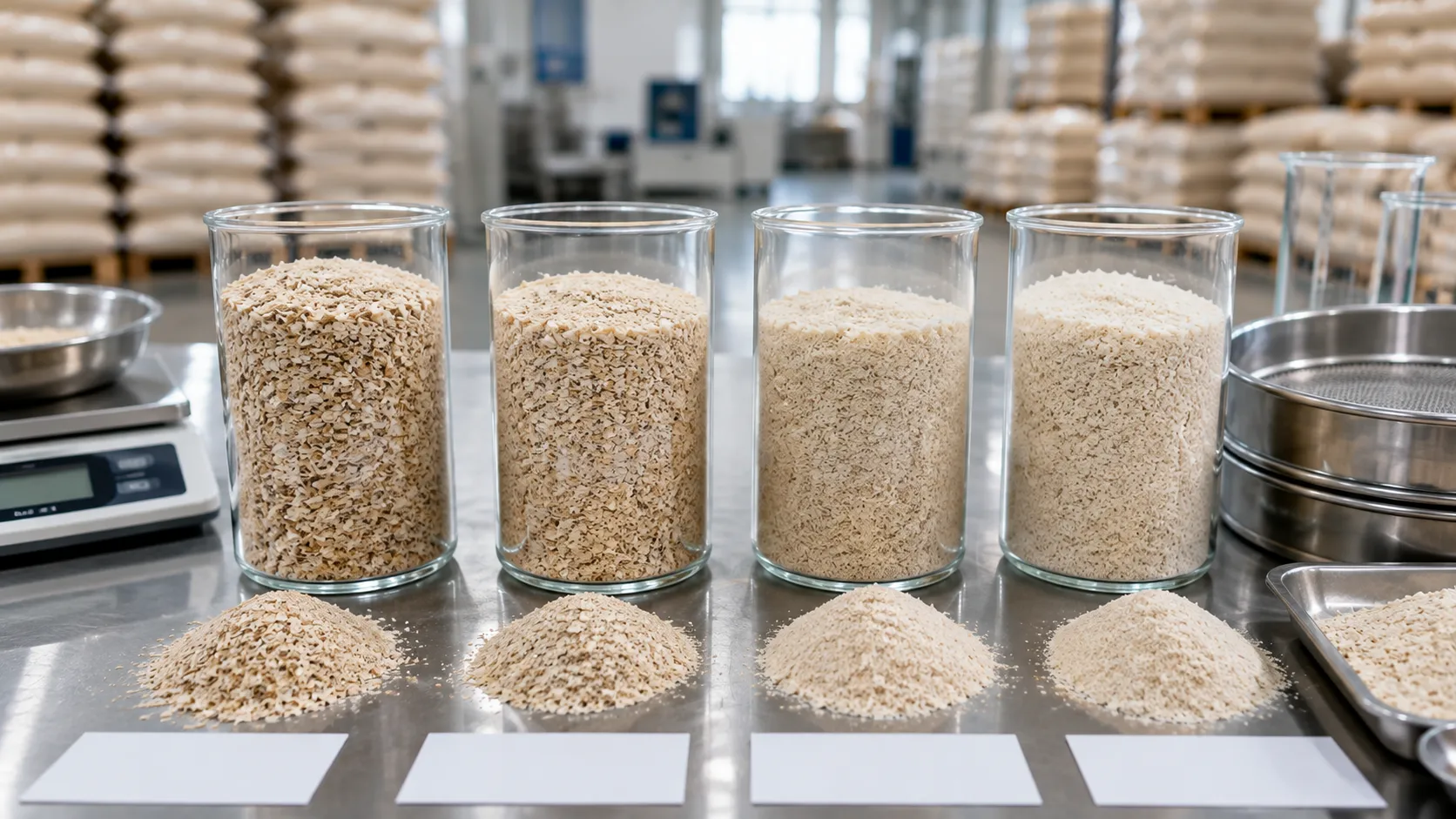
Depending on the intended use, specifications can include purity, moisture, swelling performance, mesh size, appearance, microbiological parameters and other quality requirements.
Buyers should establish the specification before comparing quotations so that different suppliers are being evaluated against the same requirements.
For a detailed explanation of the major parameters, read Psyllium Husk Specifications: Purity, Moisture, Swelling Index and Mesh Explained.
2. Ask for a Representative Sample
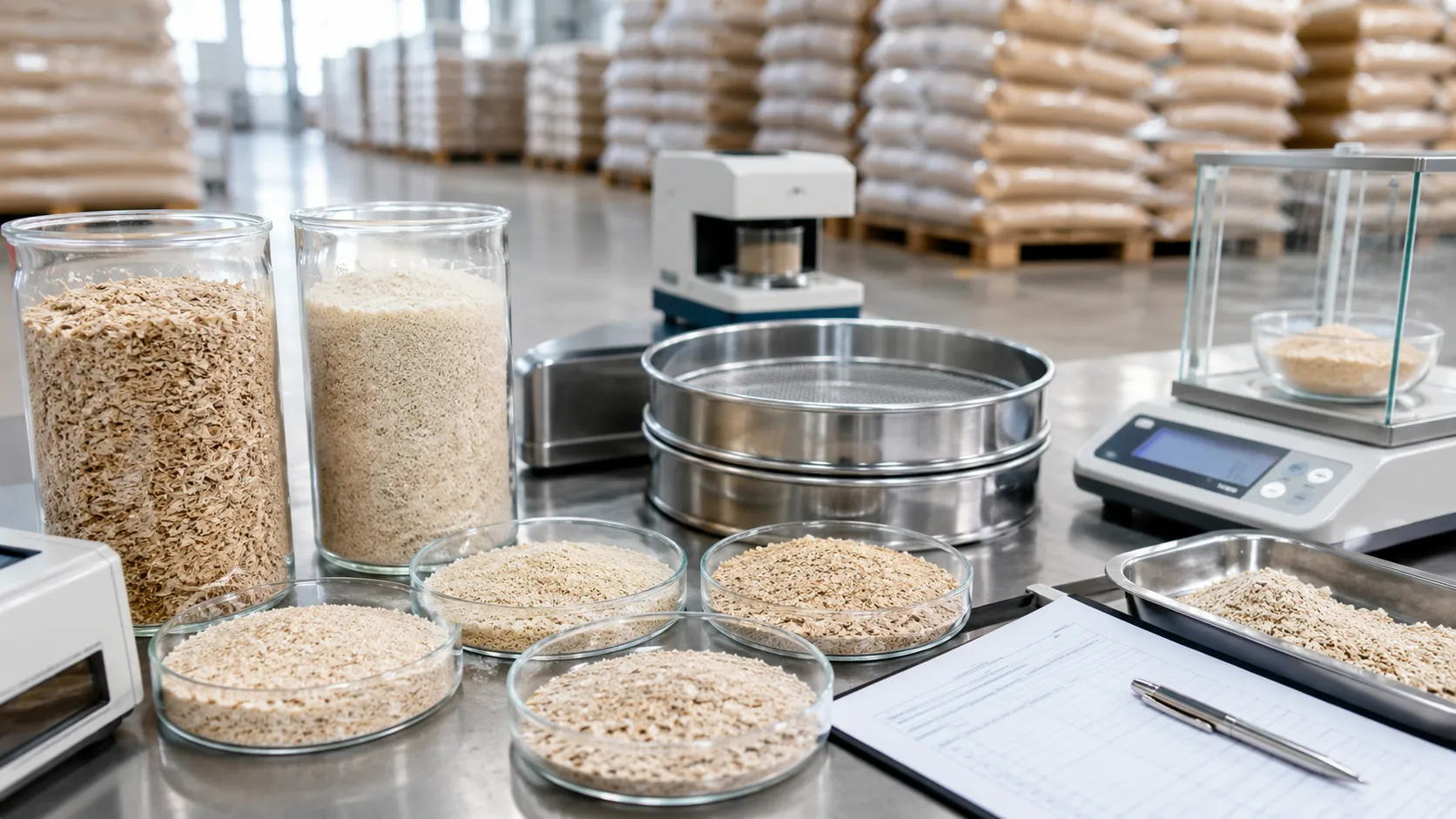
A sample allows the buyer to evaluate whether the supplied material is appropriate for the intended application before committing to a larger shipment.
The sample should represent the specification being quoted for commercial supply.
Where laboratory testing is part of the buyer's qualification process, the sample can be evaluated against the agreed parameters before moving forward.
3. Review the Certificate of Analysis
A Certificate of Analysis can provide analytical information for the relevant batch where testing is applicable.
Buyers should check whether the reported parameters correspond to their agreed purchase specification and whether the documentation identifies the relevant product or batch.
A COA should support the quality discussion; it should not replace the buyer's own qualification process where independent testing is required.
4. Understand the Exporter's Packaging Capability
Bulk psyllium husk can require packaging suited to the quantity, transportation route, storage conditions and buyer's downstream handling process.
Before confirming an order, buyers should establish:
- Pack size
- Bag or packaging material
- Inner-liner requirements where applicable
- Label information
- Number of bags per shipment
- Palletization requirements where applicable
- Private-label or customized packaging requirements if needed
Packaging should be agreed before the commercial quotation is finalized.
5. Verify the Exporter's Documentation Capability
A reliable export transaction requires more than the physical product.
Depending on the product, destination and transaction, buyers may need commercial documents, transport documents, certificates and food-safety or regulatory documentation.
Ask the exporter which documents are normally supplied with the shipment and identify any destination-specific documents before placing the order.
6. Check Traceability
Traceability becomes particularly important when buying food ingredients in bulk.
The buyer should be able to connect the received material with the relevant shipment, batch or lot information and associated quality documentation.
Ask how the exporter identifies lots and how documentation is connected to the supplied material.
7. Evaluate Supply Capacity
A supplier may be able to provide samples or small quantities without having the operational capacity required for a larger recurring program.
For bulk buyers, discuss expected monthly or quarterly requirements, order sizes, production or sourcing lead times and the supplier's ability to maintain the agreed specification across repeated shipments.
8. Discuss Quality Consistency Before Discussing Long-Term Supply
A successful first shipment does not automatically demonstrate long-term consistency.
For recurring procurement, buyers should establish a specification that can be applied to future orders.
Quality discussions should cover which parameters are critical, how they are tested and what documentation accompanies each shipment.
9. Verify the Exporter's Business Credentials
Before entering into a commercial relationship, buyers should conduct reasonable supplier due diligence.
Depending on the transaction, this may include reviewing the company's legal identity, export credentials, applicable food-business registrations, business address, banking information and relevant certifications.
Documentation requirements can differ depending on the product and destination, so buyers should identify which credentials are relevant to their particular transaction.
10. Do Not Choose an Exporter Only on Price
Psyllium husk quotations can appear different because suppliers may be offering different specifications, packaging, testing, delivery terms or payment conditions.
A meaningful comparison should therefore consider the complete commercial proposal.
Compare:
- Specification
- Quality parameters
- Packaging
- Quantity
- Incoterm
- Freight inclusion
- Payment terms
- Testing and certification
- Lead time
- Documentation
How to Shortlist Indian Psyllium Exporters
International buyers can use a structured qualification process instead of contacting suppliers randomly.
- Define the required psyllium specification.
- Define the annual or shipment quantity.
- Determine the destination country and port.
- Establish packaging requirements.
- Identify required certificates and testing.
- Request quotations from relevant exporters.
- Compare specifications on a like-for-like basis.
- Request samples from shortlisted suppliers.
- Review quality documentation.
- Complete supplier due diligence.
- Agree commercial terms and shipment conditions.
- Place the first commercial order with clearly documented requirements.
Questions to Ask a Psyllium Husk Exporter
Before confirming a supplier, buyers can ask:
- What psyllium husk specifications can you supply?
- What purity and mesh options are available?
- What quality parameters are tested?
- Can you provide a representative sample?
- Can you provide a batch-specific COA?
- What bulk packaging options are available?
- What is your normal minimum order quantity?
- What shipment quantities can you handle?
- How is batch traceability maintained?
- Which export documents will accompany the shipment?
- Which Incoterms can you quote?
- What payment terms are available?
- What is the expected lead time?
Sample Approval Before Bulk Purchase
For a new supplier, the sample-approval stage should be treated as a qualification step rather than simply a formality.
The buyer should compare the sample against the agreed specification and intended application. If the sample passes, the approved specification should become the reference point for the commercial order.
This helps reduce ambiguity when the first bulk shipment is dispatched.
Bulk Shipment Quality Control
Once a supplier is qualified, buyers can establish a repeatable quality-control process for future shipments.
This may include pre-shipment documentation review, batch-specific testing, packaging inspection, shipment checks and receiving inspection after arrival.
The exact process should reflect the buyer's product application and quality-management system.
Indian Psyllium Supply and Traceability
For a long-term buyer, understanding where the product is sourced and how it moves through the supply chain can provide useful context for quality management.
Traceability should connect the commercial shipment to identifiable product and batch information rather than relying only on the supplier's company name. Psyllium Husk Quality and Purity Standards Explained for Buyers for additional guidance on evaluating product quality.
Storage After Import
The exporter's responsibility does not replace the importer's responsibility for appropriate storage after the shipment arrives.
Buyers should establish suitable warehouse conditions and maintain packaging integrity, batch identification and stock rotation.
See Best Practices for Storing Bulk Psyllium Husk for Importers for practical post-arrival storage guidance.
How HMT Exim Approaches Psyllium Husk Export
HMT Exim works with international B2B buyers sourcing Indian agricultural and food ingredients and focuses on discussing product requirements before order confirmation.
For a psyllium sourcing enquiry, buyers can specify their required grade, quantity, packaging, destination and quality requirements so the commercial discussion can be based on the actual application.
To discuss a bulk sourcing requirement, contact HMT Exim.
Frequently Asked Questions
How do I find psyllium husk exporters from India?
Start by defining your product specification, quantity, packaging and destination. Then shortlist exporters capable of supplying those requirements and conduct sample, quality-documentation and business due diligence before placing a bulk order.
What should I ask an Indian psyllium exporter?
Ask about specification, purity, mesh, moisture, testing, packaging, batch traceability, minimum order quantity, shipment capability, documentation, Incoterms, payment terms and lead time.
Should I request a sample before placing a bulk order?
A representative sample can help a buyer evaluate whether the proposed material meets the agreed specification before committing to a larger commercial shipment.
What documents should a psyllium exporter provide?
The required document set depends on the transaction, product and destination. Buyers should establish the required commercial, quality, food-safety and destination-specific documents before shipment.
How can I compare two psyllium exporters?
Compare them using the same product specification and evaluate quality, testing, packaging, traceability, shipment capability, documentation, Incoterm, payment terms and total landed cost rather than comparing only the quoted price.
Final Takeaway
Finding a psyllium husk exporter from India is not simply a matter of finding the lowest quotation. International buyers should evaluate the complete supply proposition: product specification, quality controls, testing, packaging, traceability, documentation, shipment capability and commercial terms.
A structured supplier-qualification process can make the first transaction more transparent and create a stronger foundation for recurring bulk procurement.
If you are looking for an Indian supplier for bulk psyllium husk, contact HMT Exim with your required specification, quantity and destination.